
Edible Oil: Prices Rise Domestically Despite Global Market Drops
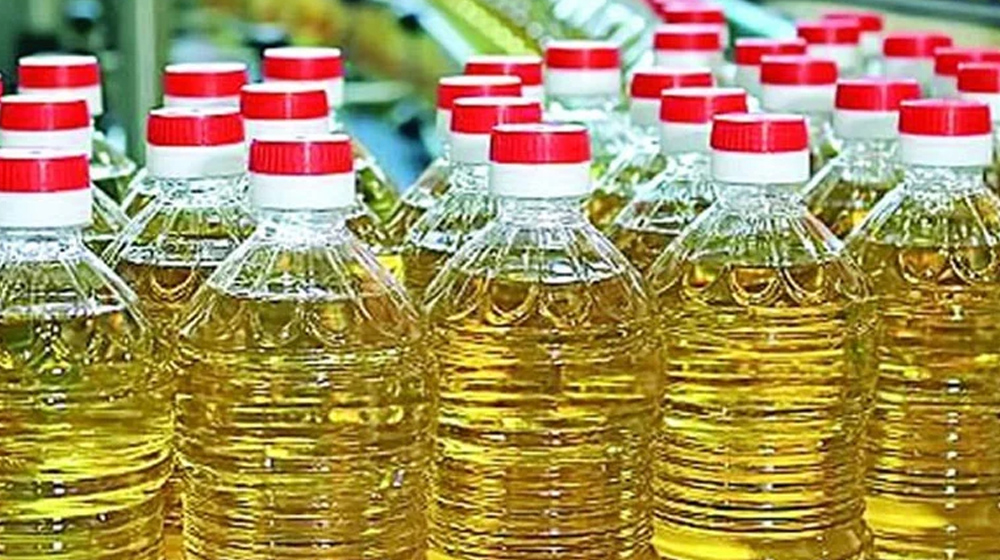 Although a downward trend in palm and soybean oil prices has been observed in the international market for some time, it has had no positive impact on Khatunganj in Chattogram—one of the country's largest wholesale markets. On the contrary, defying global market trends, the prices of these two essential edible oils have actually been raised in Khatunganj.
World Bank data indicates that the average global prices of palm and soybean oils have fallen over the past three months. Yet, during this same period, traders in Khatunganj have cited supply shortages as a pretext to charge at least 300 Taka more per *maund* (approx. 37 kg) for edible oil. Consequently, ordinary consumers in the country are being completely deprived of the benefits of the price drop in the international market.
An analysis of the World Bank’s commodity price data—or "Pink Sheet"—for August reveals that the average prices of palm and soybean oils during the June–August period were significantly lower than the averages for April–June. According to data published on September 2, the average international market price for palm oil in August was $1,117 per tonne.
The price stood at $1,104 in June and $1,101 in July, resulting in a three-month average (June–August) of $1,107.33. In contrast, the average for the preceding April–June period was $1,128.67. This represents a decrease of approximately $21.34, or 1.9 percent, in the average price of palm oil compared to the previous three-month period.
A similar downward trend was observed for soybean oil. In the international market, soybean oil prices were $1,643, $1,781, and $1,740 in April, May, and June, respectively, resulting in a three-month average of $1,721.33.
Conversely, the prices in June, July, and August were $1,740, $1,658, and $1,638, respectively. Consequently, the average price for the June–August period stood at $1,678.67. This indicates a decrease of approximately $42.67—or 2.5 percent—in the global market price of soybean oil compared to the preceding three months.
In contrast to this downward trend in the international market, extreme volatility prevails in the Khatunganj wholesale market. Currently, soybean oil is selling there at approximately Tk 7,500 per maund (37.32 kg), while palm oil is priced at Tk 6,600 per maund. Additionally, the rate for super palm oil is hovering around Tk 6,800 per maund.
According to market insiders, the price of soybean oil in Khatunganj was around Tk 7,200 per maund just a month and a half ago. This represents an increase of approximately Tk 300—or 4.2 percent—per maund within this short span. Traders have confirmed that the price of palm oil has also risen by about Tk 300 per maund during the same period.
Shahjalal, a soybean oil trader in Khatunganj, attributes the price hike to a supply shortage. He stated that the supply of oil in the market is relatively low; prices have inevitably risen because the volume of oil supplied by dealers is insufficient to meet demand.
The volatility in the wholesale market has directly impacted the retail market. Market sources report that loose soybean oil is currently selling for Tk 208–210 per kg, palm oil for Tk 175–180 per kg, and super palm oil for Tk 190–195 per kg.
It is worth noting that the government has already adjusted soybean oil prices twice this year. On April 29, the price of a one-liter bottle of soybean oil was raised from Tk 195 to Tk 199, a five-liter bottle from Tk 955 to Tk 975, and loose soybean oil from Tk 176 to Tk 180.
Subsequently, on September 2, the government further increased the maximum retail price of a one-liter bottle of soybean oil by Tk 5 to Tk 204 and set the price of a five-liter bottle at Tk 1,000. Approximately 90 percent of the total demand for edible oil in Bangladesh is met through imports. Consequently, local market prices are significantly influenced by various factors—beyond just international market rates—including the dollar exchange rate, shipping charges, port and transportation costs, tariffs and taxes, banking expenses, and refining and packaging costs.
Ala Uddin, an importer from Khatunganj, noted that comparing domestic wholesale prices with international market rates requires looking beyond the price per tonne. Market prices are determined by considering the entire cost structure—from the initial import stage to the goods reaching Khatunganj—as well as the overall supply situation.
Traders also argue that it is not possible to lower prices immediately if stocks imported at higher previous rates are still present in the market.
Import statistics indicate that the supply of edible oil in the country remains normal. According to Chattogram Customs data, a total of 65,956 tonnes of edible oil was imported under the relevant HS codes between July and September 23. Of this, palm oil accounted for 50,896 tonnes (approximately 77.1 percent of total imports), while soybean oil imports stood at 15,061 tonnes (approximately 22.9 percent).
Sharif Mohammad Al Amin, Assistant Commissioner of Chattogram Custom House, confirmed these import figures, noting that while Customs primarily maintains import-related data, market prices depend on supply dynamics and various commercial factors.
Amidst this situation, the Consumers Association of Bangladesh (CAB) has urged the government to exercise strict oversight to protect the interests of the general public.
S.M. Nazer Hossain, Central Vice President of CAB, expressed concern regarding the upcoming month of Ramadan. He emphasized the need for relevant government agencies to closely monitor the market to ensure that no pretexts—such as the artificial creation of a supply shortage—are being used to drive up prices.
It is essential to regularly monitor the extent to which consumers benefit when international market prices drop. Simultaneously, the reasons behind any unreasonable price hikes at both wholesale and retail levels should be subjected to strict scrutiny.
E-mail: thedailyprimenewsbd@gmail.com
All rights reserved © The Daily Prime News (International Newspaper And Media Company) প্রিন্ট করুন
 সেভ করুন