
Trump Announces Russian Diesel Imports; Zelenskyy Calls It a ‘Gift’ for Putin
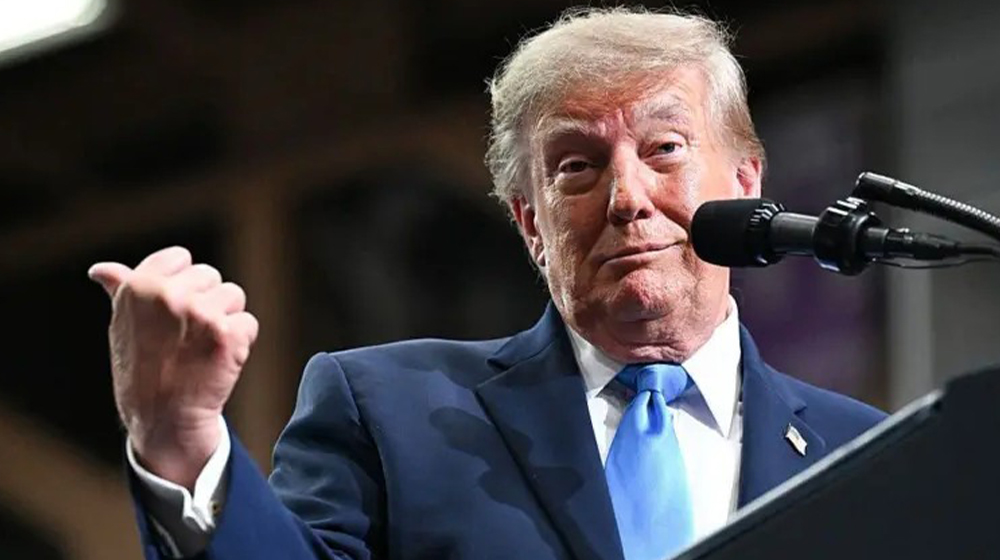 US President Donald Trump has announced a deal to import Russian diesel into the United States—a move Ukrainian President Volodymyr Zelenskyy has described as a gift to Putin.
Trump stated that Putin has agreed to immediately release 300,000 tons of diesel for the US and global markets. Additionally, Russia is set to release 500,000 tons in November, followed by another million tons later.
However, Ukrainian President Volodymyr Zelenskyy has reacted angrily to this development.
He views the move as a gift to Putin. Zelenskyy argued that investments in the war should be scrapped rather than prolonged.
Reports indicate that the US Treasury Department has temporarily lifted the ban on Russian diesel exports until April 7, though other Russian assets held in US banks remain frozen.
In a post on Truth Social, Trump added that an additional 3 million tons of diesel would be supplied in the short term, depending on the condition of Russian refineries—facilities that had previously been damaged by Ukrainian attacks.
Putin stated that Russia—which had imposed a ban on diesel exports earlier this year—is now ready to supply oil and petroleum products to the US and global markets, though he did not specify the exact volume of the supply.
Analysts, however, have questioned whether it is feasible for Russia to supply such vast quantities of diesel and to what extent this might lower fuel prices for US consumers.
Tim Armitage, an investment strategist at Quilter Cheviot, noted that the volume of diesel mentioned by Trump is small relative to demand.
By his calculations, the initial batch of diesel amounts to approximately 2.25 million barrels, whereas daily diesel demand in the US stands at around 3.8 million barrels. Consequently, he believes this supply will not lead to any significant change in fuel pump prices in the country.
Armitage noted that further diesel shipments are scheduled. However, this move by President Trump to curb inflation ahead of the midterm elections appears to be a somewhat desperate attempt.
Meanwhile, the BBC has asked the White House what the United States will offer in exchange for this supply commitment from Russia.
A UK government spokesperson stated that their position on maintaining support for Ukraine and working with international partners to establish lasting peace could not be clearer.
He added that the UK would continue to enforce harsh sanctions against Russia—sanctions more severe than any previously imposed in the country's history. These measures aim to exact a heavy price for Putin's aggression while supporting efforts to achieve a just and lasting peace.
Friday's announcement marks Trump's latest initiative to lower fuel prices in the US. He has been under pressure for months to manage the political fallout from the conflict involving Iran, which began in February. Simultaneously, rising global fuel prices have impacted the US market.
Over the past few months, the conflict involving Iran has driven up the prices of petrol and, particularly, diesel in the US. This has negatively affected Trump's popularity among the general public. Americans are struggling with high fuel costs and their ripple effects, alongside rising inflation across the country.
The current average price of diesel in the US is $6.28 per gallon. According to data from the American Automobile Association (AAA), diesel prices hit a record high of $6.53 in late September before easing slightly.
Shortly after Trump's announcement, the US Treasury Department issued a temporary license permitting Russian diesel to enter the US market.
In a statement, Putin said he had spoken with Trump on Friday regarding the global fuel situation. He stated that Russia has confirmed its readiness to supply oil and petroleum products to global markets, including the US market.
Putin's special envoy, Kirill Dmitriev, welcomed this agreement on social media.
He remarked that cooperation between Russia and the US in the diesel and fuel sectors would benefit the world.
However, Ukrainian President Volodymyr Zelenskyy criticized the agreement.
He stated that peace cannot be achieved by offering gifts to Putin. He argued that Russia would spread "more terror" in exchange for supplying diesel.
Zelenskyy further wrote, "We rely on the US for fair support of our defense to save lives and ensure the security of the Ukrainian people. At the same time, we expect the US to negotiate with Russia from a position of strength—a stance that must be firm, not weak."
A UK government spokesperson stated that their position regarding support for Ukraine is clear. He said, "We will continue to work closely with international partners to ensure the necessary military and financial aid for Ukraine's self-defense."
The spokesperson added that the UK would maintain pressure on Russia by keeping in place the toughest sanctions regime ever imposed on the country.
The UK government spokesperson further noted, "Russia could end this war today if it chose to. We are committed to supporting Ukraine for as long as necessary and will continue working with partners to establish lasting peace."
Russian oil refineries have been damaged by Ukrainian drone attacks. As a result, this year the country...
Severe fuel shortages have emerged in successive waves.
According to the International Energy Agency (IEA), diesel production in Russia has dropped by approximately 30 percent.
US President Donald Trump has criticized these attacks on Russian oil refineries. In his view, these attacks have driven up fuel prices.
However, Ukrainian President Volodymyr Zelenskyy defended the attacks on Friday.
He stated that Russia has been attacking Ukraine's energy infrastructure for years, and Ukraine is carrying out these strikes in retaliation.
Zelenskyy added that if Russia did not destroy Ukraine's energy infrastructure, Ukraine would not attack Russian oil refineries either.
Trump's posts on Truth Social often contain incomplete information. In this instance, too, it remains unclear exactly how Russia would supply this fuel to the global market or what it would receive in return.
Nevertheless, this deal with Russia is being viewed as a significant departure from the US's previous stance. The US Congress recently enacted legislation authorizing the imposition of new sanctions and tariffs on countries that import Russian oil and gas; President Donald Trump signed the bill into law.
This agreement with Russia could expose Trump to criticism from European allies and pro-Ukraine politicians within the US.
They argue that, through this deal, the US President is effectively helping to fund Moscow's war effort.
It remains unclear to what extent this deal with Russia might lower fuel prices. The price of Brent crude—the global benchmark for crude oil—remains above $103 per barrel; prior to the outbreak of the conflict involving Iran, the price was around $73.
With US midterm congressional elections approaching—which will determine whether the Republican Party retains control of Congress—President Donald Trump is exploring various ways to alleviate the political pressure mounting within his own party. Earlier this week, Trump stated that he was considering a temporary suspension of the federal tax on gasoline. At the same time, he announced that "red diesel" could be used on U.S. highways without incurring federal taxes.
To alleviate concerns regarding fuel supplies, Trump also successfully pressured G-7 nations to release 100 million barrels of oil and diesel from their reserves into the market. Previously, he had also supported a proposal to halt diesel exports from the United States.
E-mail: thedailyprimenewsbd@gmail.com
All rights reserved © The Daily Prime News (International Newspaper And Media Company) প্রিন্ট করুন
 সেভ করুন