

 Reporter Name

Former Prime Minister of Bangladesh Sheikh Hasina has been abroad for almost two years. Following the 24th mass uprising, she was sentenced to death and her party Awami League’s activities were banned.
Last Tuesday (June 23), the Awami League celebrated its 77th founding anniversary amid nationwide restrictions. During this time, many leaders and activists of the banned party were arrested amid tight security.
In this situation, in a special interview given to Indian media NDTV, Sheikh Hasina, who is in exile in India, said, “I will return to the country this year.” In her words, the Awami League is not just a political party, it is a ‘power’. She also said that any attack on minorities is an attack on the spirit of Bangladesh’s independence.
Question: You have indicated more than once and your supporters are also hopeful that you will return to Bangladesh soon. Even some leaders of the party have said that you can return to Bangladesh within this year. But there is a death sentence against you. How realistic is this in this situation?
Sheikh Hasina: My return to my country is not a matter of personal ambition. It is related to the political rights of the people of Bangladesh, the restoration of democracy, the rule of law and the revival of the spirit of our great liberation war. I do not do politics for power. I do politics for the welfare of the people of Bangladesh and to build the Golden Bengal dreamed of by the Father of the Nation Bangabandhu Sheikh Mujibur Rahman.
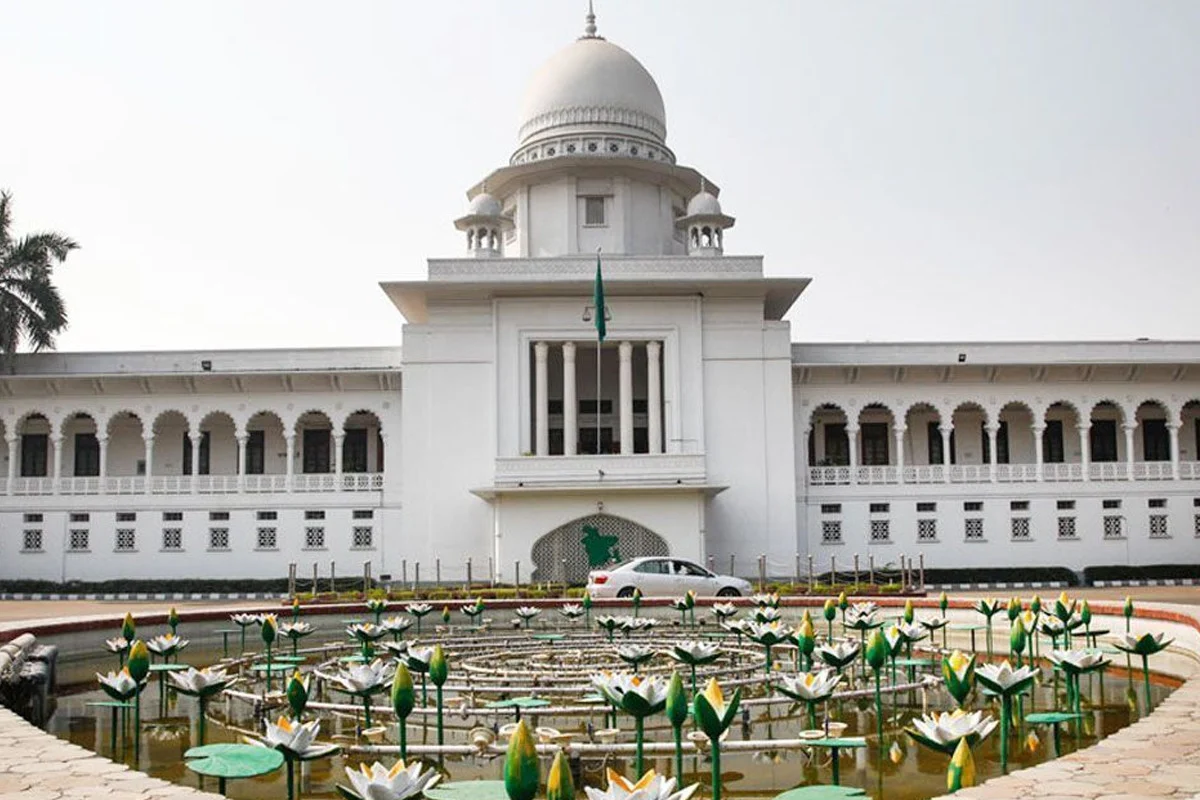
The verdict given against me is not justice. It is part of an illegal, unconstitutional and politically motivated process. The judiciary of Bangladesh has been used as a tool of political vendetta to make the Awami League leaderless. Such attempts have been made in the past. They failed then too, and they will fail this time too.
I am not afraid of death. In 1975, I lost my parents, brothers and almost all my family. There was an attempt to kill me through a grenade attack on August 21. There have been countless conspiracies against me. But I have stood by the people of Bangladesh despite all the conspiracies. I have been elected as the Prime Minister five times by the people of Bangladesh and have worked for the country’s unprecedented development.
Almost my entire life has been about the people of Bangladesh, the Awami League, the democratic movement and the development of the country. So I want to make it clear. I will return to my country this year after overcoming all obstacles and conspiracies.
Question: According to many, the Awami League is regaining public support. Does the Awami League currently have the organizational strength to transform this support into political success?
Sheikh Hasina: The Bangladesh Awami League is not a paper organization. It is a political force deeply connected to the soil of Bengal, the people of Bengal, the history of Bengal and the identity of the Bengali nation. In its 77-year journey, the Awami League has been attacked many times, shed blood many times, and been banned many times. But each time, it has risen again with the power of the people.
The return of the Awami League does not depend on the failure or weakness of anyone else. The Awami League creates its own path with the people. The support of the people has always been with us. With that strength, we have worked tirelessly for the development of the people while in government.
The anti-Bangladesh forces have misled a section of the people and removed the Awami League from state power through a planned conspiracy. But despite all their efforts, they could not erase the Awami League from the hearts of the people.
After the illegal, unconstitutional and occupying interim government led by Dr. Yunus, people are now seeing the reality with their own eyes under the BNP government formed through rigged elections. There is no democracy, no rule of law, no security in the country. The economy has weakened. Minorities are being attacked. Extremism is spreading. Awami League leaders and workers are facing unimaginable state oppression.
People know how to compare. They understand that if the Awami League is in power, there is stability, development and security of people’s lives and property in the country.
On the question of organizational strength, I would like to say that the Awami League knows the ins and outs of Bangladeshi politics like the back of its hand. This party was born in Bangladesh under the leadership of the Father of the Nation Bangabandhu Sheikh Mujibur Rahman. The Awami League has led every democratic movement in the country. The ability to translate the support and aspirations of the people into political reality is in the blood of the Awami League.
Just as gold becomes purer in fire, the oppression and torture of the rulers are making the Awami League stronger every day.
On the 77th founding anniversary of the party, my message to the leaders, workers and supporters is very simple. Stay united and stand by the people. Deepen your relationship with the people in every village, neighborhood, ward and union. Stand by the oppressed. Do not compromise on the security and dignity of minorities, women, children, workers, poor and marginalized communities.
We have done it. We have given ownership of houses along with two hundred acres of land to about 42 lakh 80 thousand 115 people completely free of cost. We have made Bangladesh a global role model of development through mega projects like Padma Bridge, Metrorail, Karnaphuli Tunnel, Expressway, Digital Bangladesh and Bangabandhu Satellite. We have proven that the Bengali nation can stand tall on its own strength if given opportunities, a peaceful environment and honest leadership.
After August 5, the development trend of Bangladesh has been destroyed. The reign of militancy and terrorism has been established in the country. Only the Awami League can free the country from that situation. The people have understood it. If there are free, fair and participatory elections, the Awami League will win. Yunus and the anti-Bangladesh political forces also know this very well. That is why the illegal interim government has systematically banned the activities of the Awami League, kept the party out of the electoral process and destroyed the democratic political trend of the country. After August 5, a model of a failed state has been established in Bangladesh.
Question: There has been a report that you had behind-the-scenes discussions with the top leadership of BNP about lifting the ban on Awami League and ensuring a fair trial for you. Is there any truth to these claims?
Sheikh Hasina: Conspirators often deliberately launch such campaigns to mislead the people. My position on this is very clear. Democracy in Bangladesh, political rights of Awami League, people’s right to vote and justice are not the subject of any secret negotiations. These are constitutional rights of the people of the country.
Lifting the ban on Awami League is not a mercy or grace, it is the minimum condition of a democratic state. Similarly, justice is not a gift or mercy, it is a fundamental right of the people. If there is a case against a citizen, political leader or political party, it must be conducted through an independent, impartial and lawful judicial process. Justice can never be ensured by politically directed tribunals, fabricated cases, intimidation of witnesses or pressure on the judiciary.
I am always in favor of a political solution. But that solution must be open, principled and based on the aspirations of the people. Not on the basis of secret agreements. Awami League does not seek anyone’s political mercy or favor. Awami League will do politics based on constitutional rights, people’s support and people’s strength.
Question: Recently, there have been reports of attacks on temples and members of the Hindu minority community, as well as protests and threats by some Islamist groups. How do you view these incidents?
Sheikh Hasina: The matter is very painful and deeply worrying. Although it is sad, this is not an isolated incident. Whenever the forces supporting the liberation war have weakened in Bangladesh, whenever communal forces have seized state power or have exerted influence in the governance of the state, then terrible persecution has come upon the minority community. Their homes, places of worship, businesses, lives and dignity have all been threatened.
Since August 5, no one associated with the Hindu, Buddhist, Christian, tribal, Ahmadiyya community and Sufi community is safe. Temples have been vandalized. Idols have been broken. Houses have been looted. Extortion, violence against women and obstruction of religious ceremonies continue.
Chinmoy Krishna Das is still in jail in a false case for speaking out about minority rights. This proves that despite the change of government, the fate of minorities in Bangladesh has not changed.
I want to make it clear that minorities are not a vote bank, they are equal citizens of Bangladesh. In the great liberation war of 1971, people of all religions and communities, Hindus, Muslims, Buddhists, Christians, rose above religion, caste and identity and fought shoulder to shoulder. The Father of the Nation Bangabandhu Sheikh Mujibur Rahman dreamed of a non-communal Bangladesh, where people of all religions would live with equal rights. That Bangladesh cannot be allowed to become a hostage to communal aggression and extremism.
Those who attack minorities, vandalize temples or threaten people in the name of religion are not just enemies of a community. They are enemies of the spirit of independence of Bangladesh. When a citizen is afraid because of his religious identity, the state fails. Today, many minority families are living in fear. They have to take to the streets to demand security. This is a shame for independent Bangladesh.
The security of minorities must be ensured. Those involved in attacks on temples and places of worship must be brought to justice. The state must take a strong stand against the threats of communal groups. Those who peacefully speak out for the rights of minorities should not be falsely prosecuted or harassed, but rather they must be listened to. Ensuring religious freedom, equality and security is the fundamental responsibility of the state. Failure to fulfill this responsibility is not only an internal problem for Bangladesh, it is also a matter of concern for the stability and human values of South Asia.
Question: You are currently in India. How are you personally spending this time? Are you meeting your daughter regularly, or has life in exile become quite limited?
Sheikh Hasina: For a long time, there has been nothing special about my personal life. I have dedicated my life to the people of Bangladesh. I lost everything in 1975. Even then, I had to stay in exile for a long time. Later, I returned home and fought in the struggle to establish democracy. Today, Bangladesh is going through a difficult time again. It deeply hurts me that I cannot be there at this critical moment in the country. I was not given that opportunity.
I have normal contact with my family members. But my heart is in Bangladesh. The land where my father is buried, the land where my family’s blood is mixed with the land, the people of the country for whom I have worked all my life. Being away from the people of my own country, away from the smell of my own land, and hearing the news of the suffering of my leaders and workers every day is very painful.
Today, a much bigger issue than my personal life is the rights of the people of Bangladesh. Even from a distance, I observe the situation in the country every day. I inquire about our leaders and workers. I listen to the stories of oppressed families. I try to highlight the situation of democracy and human rights in Bangladesh in the international arena. My struggle does not stop.
My strength is the people of Bangladesh, the leaders and workers of the Awami League, and the ideals of the Father of the Nation. I am working every day to restore democracy in Bangladesh and unite the people. I believe that the people of Bangladesh will bring democracy back. Awami League will rise again with the power of the people. I am with that struggle and will be with it until the last day of my life.